 Download catalog
 Technical support
 Check your order
 Tiếng Việt
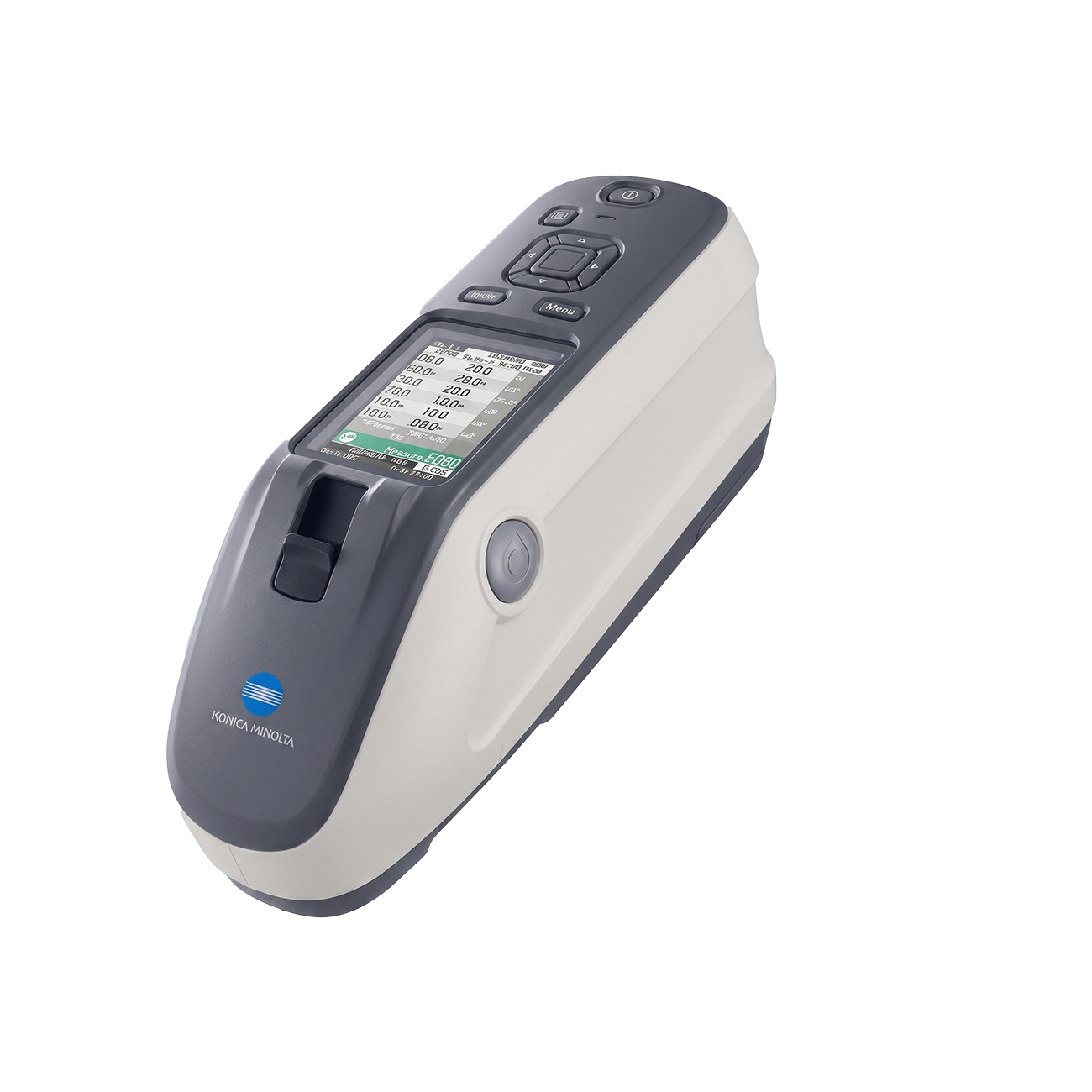
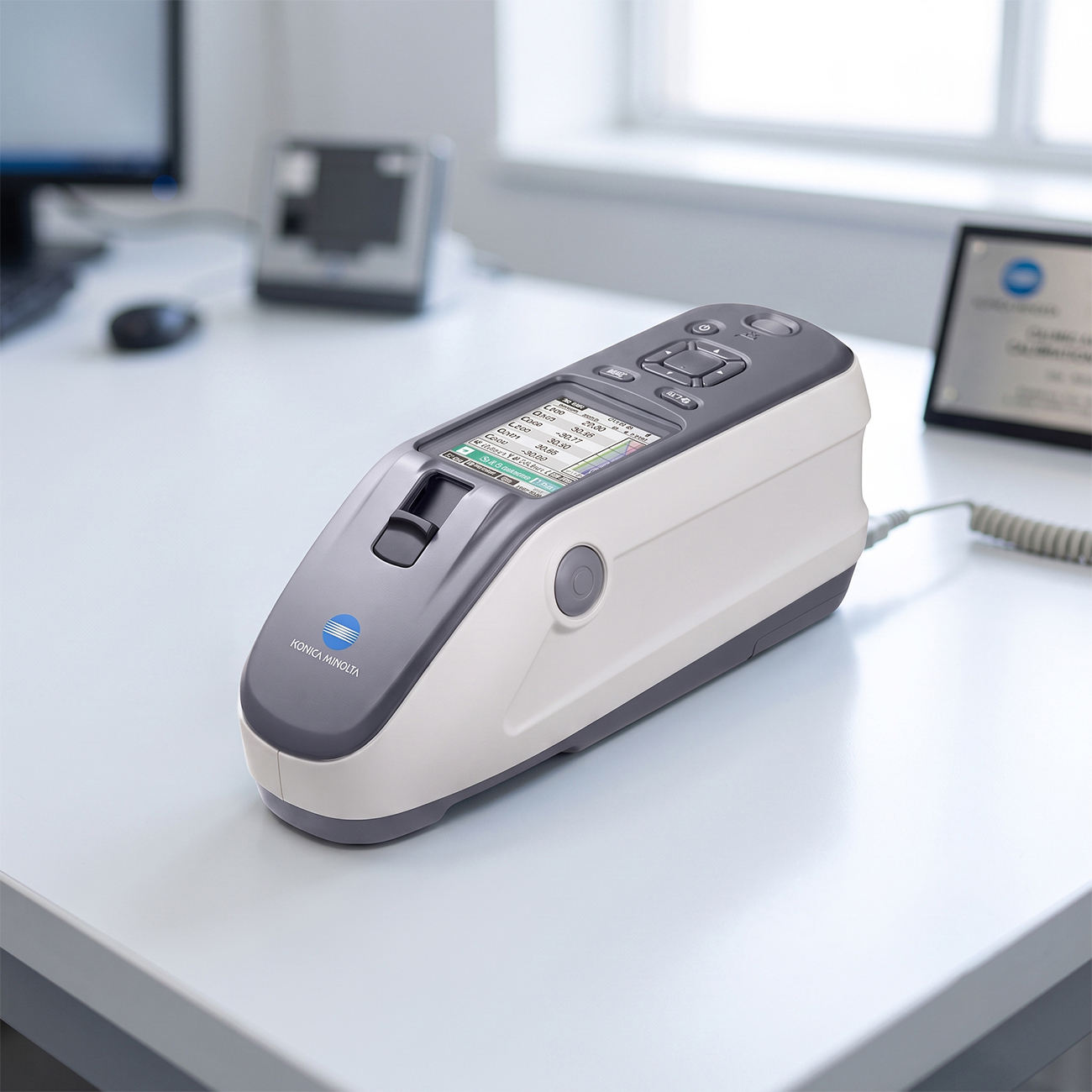
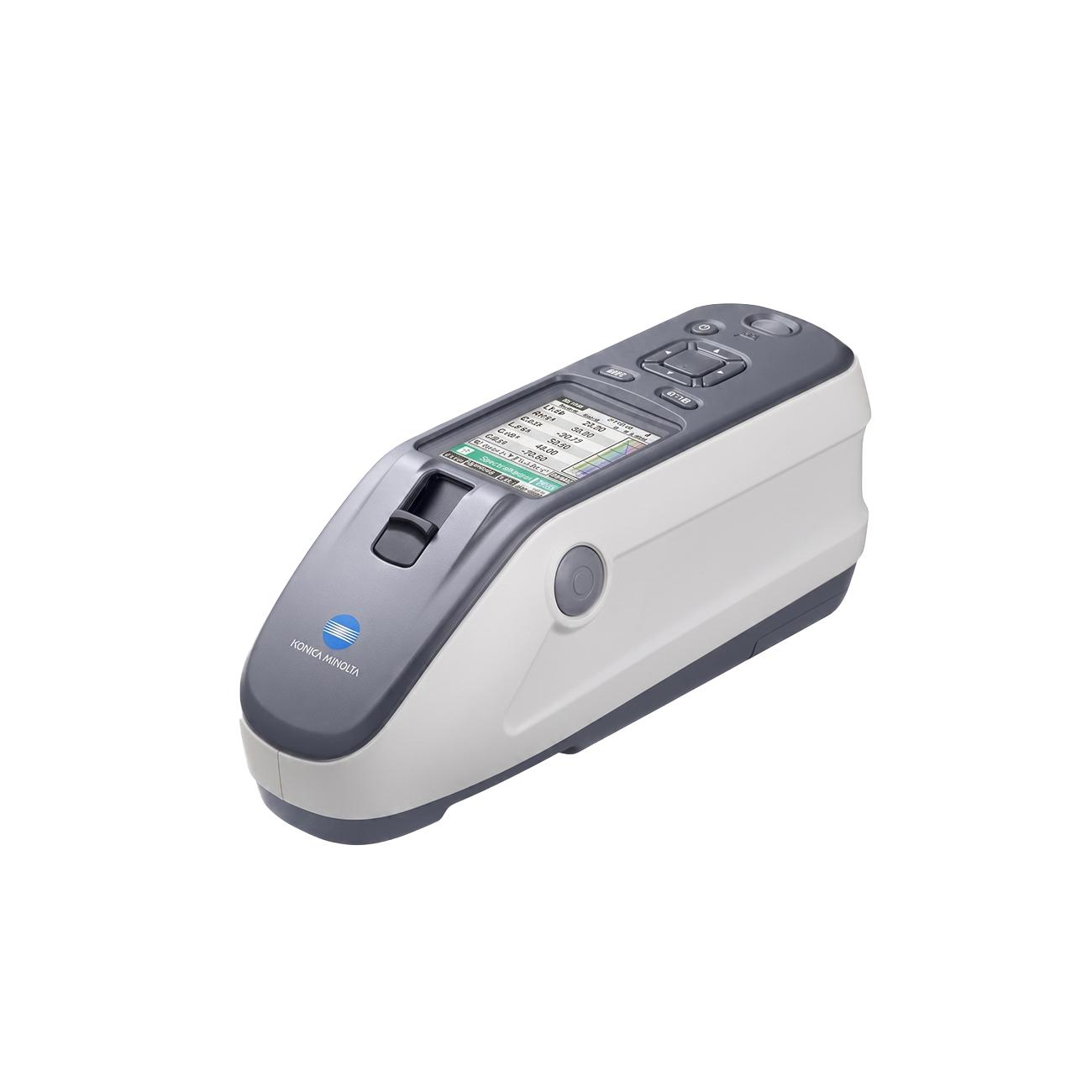
Konica Minolta CM-26d Spectrophotometer
Contact
SKU: CM-26d
Warranty: 12 Months
Origin: Japan




Product Details
Konica Minolta CM-26d Spectrophotometer
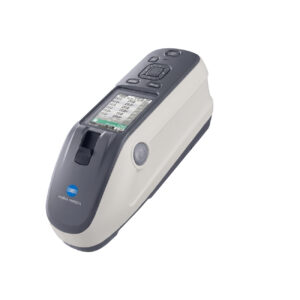
The CM-26d spectrophotometer is the latest generation in the handheld spectrophotometer lineup, featuring a unique horizontal design perfectly optimized for color analysis on flat surfaces or large color specimens within confined spaces. This instrument accommodates both left- and right-handed users comfortably.
The CM-26d handheld spectrophotometer delivers outstanding precision and exceptionally tight Inter-Instrument Agreement (IIA), metrics typically reserved for reference-grade laboratory instrumentation. This high accuracy streamlines seamless data communication across the entire supply chain, from raw material suppliers to consumers, upgrading overall operational performance. The CM-26d features a tight IIA specification of within $\Delta E^*ab \le 0.12$ (average of 12 BCRA color tiles), representing a 40% improvement compared to legacy models.
The CM-26d enables versatile switching between MAV (Ø8mm) and SAV (Ø3mm) measurement areas, making it easy to analyze components of varying dimensions. It comes equipped with an illuminated camera viewfinder to guarantee precise aperture positioning on patterned targets or micro parts. Concurrently, the sample contact surface is engineered to minimize specimen marking or surface deformation, ensuring the most reliable measurement results.
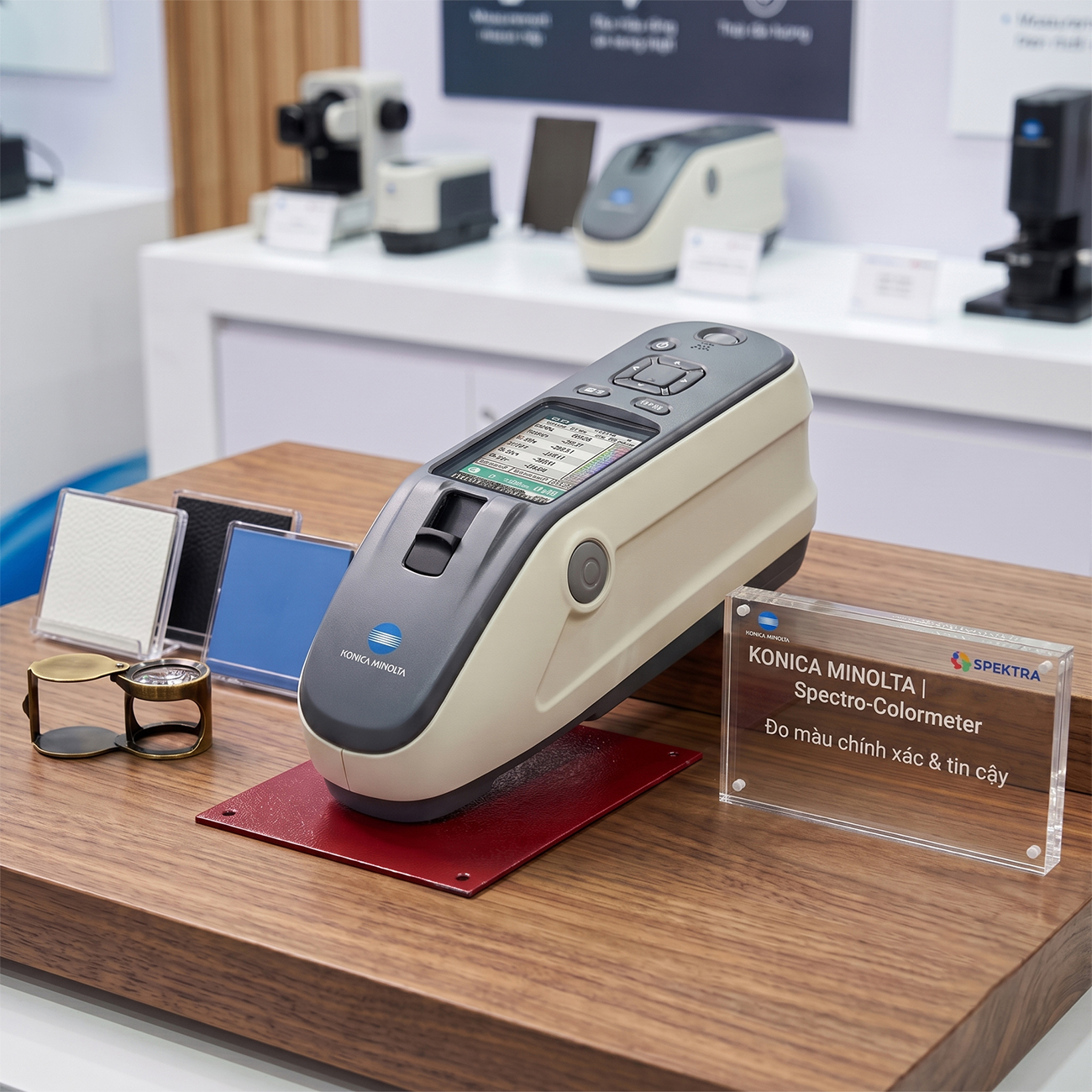
Featuring a compact form factor, optional Bluetooth™ connectivity, and a high-resolution color display screen, the CM-26d is ideally suited for field work across a diverse range of industries. The instrument allows operators to filter stored data based on additional metadata tagging and supports image-based measurement workflows. This layout lowers the learning curve for novice operators, establishing a new benchmark for operational simplicity and high-speed data processing.
The CM-26d integrates numerous supporting features designed to boost workflow throughput, minimize material waste, and lower product rework costs, driving significant operational savings during color-critical manufacturing processes. New characteristics of the CM-26d spectrophotometer include on-screen graphical guidance for routine colorimetric testing steps within specific workflows. Paired with reduced data cycle times, this ensures operators of all skill levels maintain peak productivity, accuracy, and absolute consistency.
The bundled CM-CT1 configuration utility software allows administrators to create, log, and back up instrument profile configurations, exportable as configuration files to be shared across the supply chain to guarantee global fleet uniformity. This software tool is available as a free download, supporting synchronized deployment of instrument parameters across manufacturing sites to upgrade the precision and efficiency of global color management systems.
Technical Specifications of CM-26d
The optical illumination and viewing system details:
- Illumination / Viewing geometry: d/8° (diffuse illumination, 8° viewing angle).
- Simultaneous measurement capability: Switchable SCI (Specular Component Included) and SCE (Specular Component Excluded).
- Integrating sphere diameter size: Ø54 mm.
- Illumination source: Dual pulsed Xenon lamps.
- Photodetector: 40-element silicon photodiode array sensor.
- Spectral separation device: Planar diffraction grating system.
- Wavelength range: 360 nm to 740 nm with a 10 nm spectral pitch.
- Optical half bandwidth: Approx. 10 nm.
- Reflectance range: 0 to 175% with a display resolution of 0.01%.
The illumination and measurement areas are specified as follows:
- MAV (Regular Illumination Area): Ø12 mm; SAV (Micro Illumination Area): Ø6 mm.
- MAV (Regular Measurement Aperture): Ø8 mm; SAV (Micro Measurement Aperture): Ø3 mm.
Instrument accuracy and repeatability specifications:
- Repeatability: Standard deviation within $\Delta E^*ab \le 0.02$ when a standard white calibration plate is measured 30 times at 5-second intervals after white calibration.
- Inter-Instrument Agreement (IIA): Within $\Delta E^*ab \le 0.12$ based on the average of 12 BCRA Series II color tiles.
Advanced features of the CM-26d:
- Flexible Numerical UV Control: Supports profile options including 100% UV, 0% UV (UV-cut), and instantaneous adjusted calibration routines.
- Standard Observers: CIE 2° and CIE 10° Standard Colorimetric Observers.
- Standard Illuminants: Compatible with multiple standard light sources: A, C, D50, D65, and various processing profiles.
- Versatile Data Display: Renders absolute colorimetric values, color-difference graphs, spectral reflectance plots, and PASS/FAIL judgments.
- Colorimetric Indices: Displays industrial metrics such as MI (Metamerism Index), WI (Whiteness Index), YI (Yellowness Index), and more.
- Color Difference Equations: Compatible with standard formulas including $\Delta E^*ab$, $\Delta E^*94$, $\Delta E_{00}$ (CIEDE2000), and CMC (l:c).
Measurement processing cycle and memory logging:
- Measurement time: Approx. 0.7 seconds per cycle readout.
- Memory logging capacity: Stores up to 1,000 target standard records and 5,100 routine sample data sets.
Battery performance and secondary hardware features:
- Battery life capacity: Yields approx. 3,000 measurements (SCI or SCE records) per full charge cycle utilizing the dedicated lithium battery pack.
- Sample alignment viewfinder: Integrated camera system illuminated by high-brightness white LEDs.
- Display screen: 2.7-inch high-resolution color TFT-LCD featuring an automated reverse-view flip rotation mode.
- Multi-language support: Operational menus available in English, Japanese, German, and multiple other global languages.
- Interface ports: USB 2.0 interface and Bluetooth connectivity profiles.
Power management and environmental operating parameters:
- The Konica Minolta CM-26d is powered via a removable rechargeable lithium-ion battery pack or directly through USB port bus power.
- Routine charging cycle time: Approx. 6 hours to full capacity.
- Operating temperature/humidity range: 5 to 40°C, relative humidity 80% or less non-condensing (at 35°C).
- Physical outer dimensions: Approx. 81 (W) × 93 (H) × 229 (D) mm.
- Total instrument weight: Approx. 630 g (highly lightweight and ergonomic for mobile inspection tasks).
- The industrial design guarantees excellent structural flexibility and long-term user utility on-site.
Reviews (0)
No comments yet
Related products
- SKU: CL500
- Origin: China
- Warranty: 12 Months




Bạn vui lòng nhập đúng số điện thoại để chúng tôi sẽ gọi xác nhận đơn hàng trước khi giao hàng. Xin cảm ơn!
There are no reviews yet.