 Download catalog
 Technical support
 Check your order
 Tiếng Việt
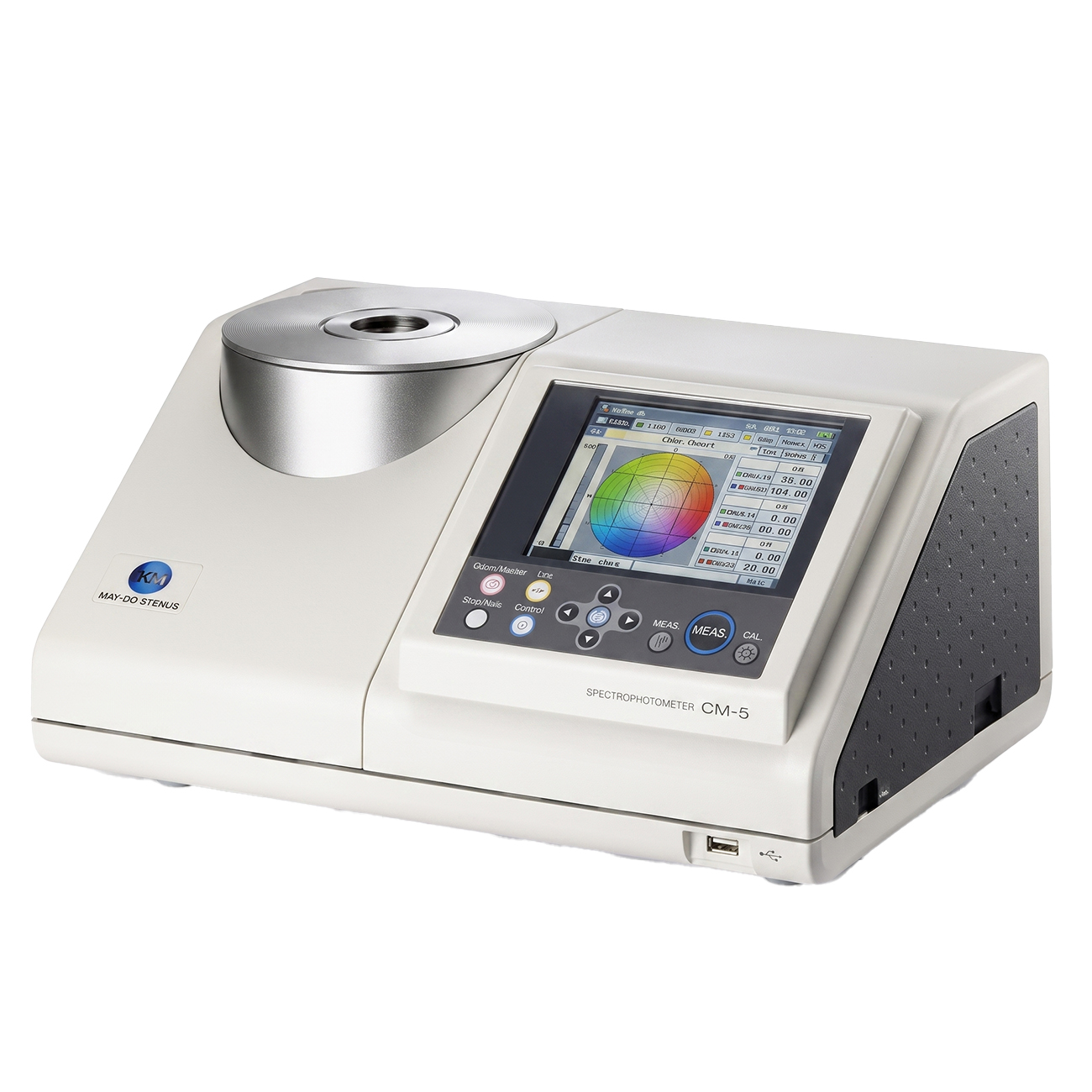
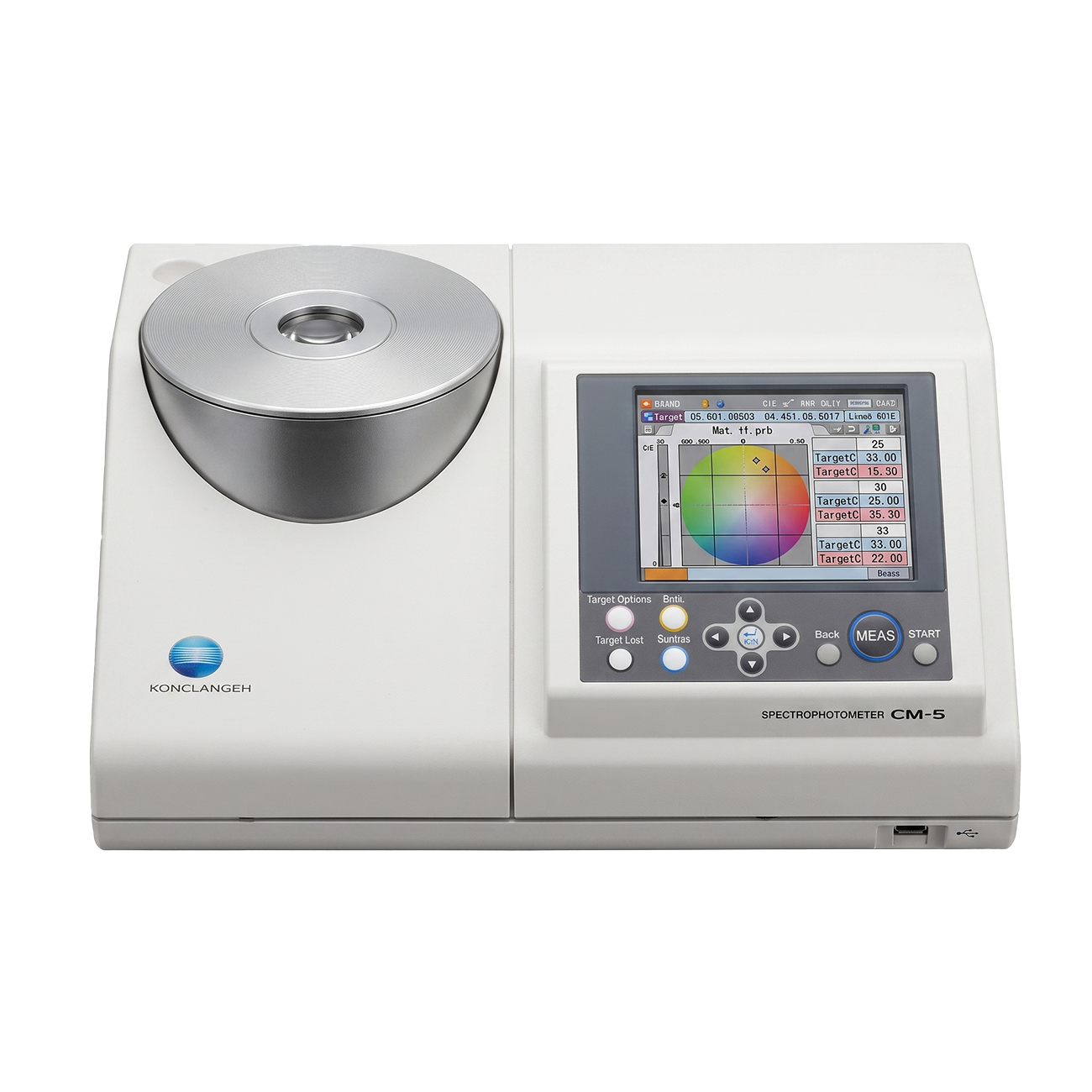
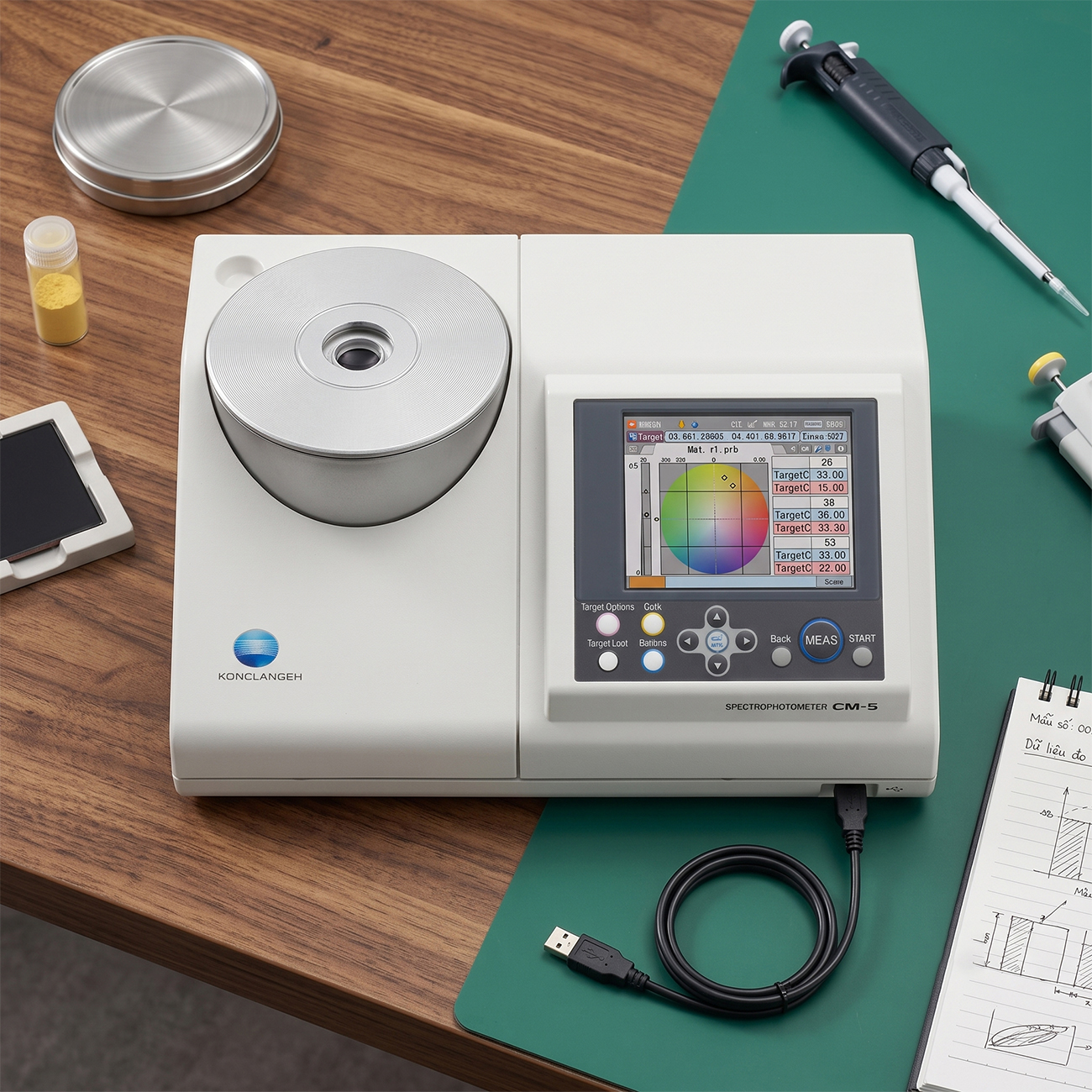
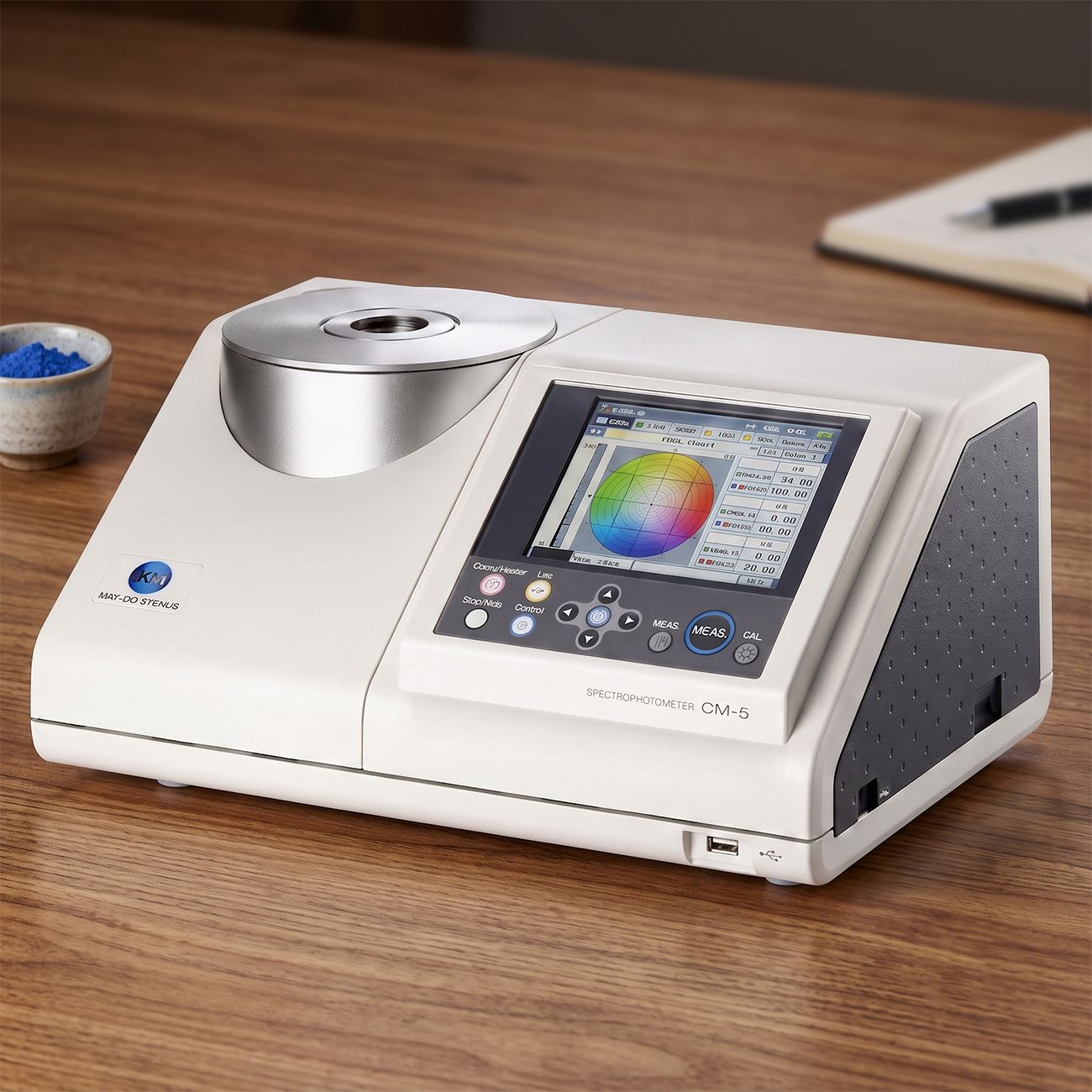
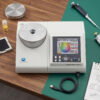
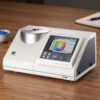
Konica Minolta CM-5 Spectrophotometer
Contact
SKU: CM-5
Warranty: 12 Months
Origin: Japan




Product Details
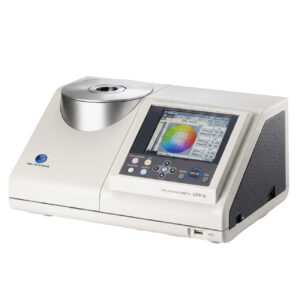
Konica Minolta CM-5 Spectrophotometer
The Konica Minolta CM-5 spectrophotometer is a versatile solution for advanced color analysis. This instrument is extensively implemented across key industrial sectors, such as food manufacturing, pharmaceuticals, and plastics processing, delivering reliable color evaluation on diverse specimen types ranging from powders and granules to highly viscous pastes.
Key Features and Outstanding Benefits of the CM-5
Benefits
The Konica Minolta CM-5 empowers users to manage product color variations with exceptional accuracy and consistency, drastically reducing the risk of off-color errors during production. It enables precise color comparison between target standards and test samples, providing detailed, quantifiable metrics regarding color deviation.
For example, the instrument indicates whether a test sample is lighter, darker, or shifted toward a specific color direction—such as more bluish, less yellowish, reddish, or greenish. Based on these precise metrics, quality control managers have a solid, objective foundation to adjust product formulations and align color output perfectly with defined master standards.
Features and Characteristics
Advanced colorimetric algorithms integrated into this benchtop system support multiple color spaces and indexes, including: Lab*, Lab, XYZ, Yellowness Index (YI), Whiteness Index (WI), Gardner, as well as Hazen (APHA) and Iodine color metrics.
A large-sized, high-contrast LCD screen is integrated directly into the instrument body, allowing operators to monitor testing results on-site comfortably. Furthermore, the system supports two primary optical measurement geometries: reflectance and transmittance.
Measurement Geometries of the Konica Minolta CM-5 Spectrophotometer
The measurement methodologies of the Konica Minolta CM-5 spectrophotometer include:
Reflectance Method: Applied to evaluate opaque specimens such as solids and paste-like materials, including but not limited to plastic chips, mechanical components, granules, powders, and viscous foods like tomato sauce or chili paste.
Opaque specimens are defined as materials that do not allow light to pass through clearly, whereas transparent or translucent specimens permit light transmission to varying degrees.
Transmittance Method: Tailored specifically for evaluating transparent or translucent specimens. Common applications include beverages, chemical solutions, coconut milk, fragrance liquids, as well as glass panels or transparent plastics.
Technical Specifications of the CM-5 Spectrophotometer
Illumination and Viewing System:
- di:8° and de:8° diffuse illumination geometry with an 8° viewing angle.
- Enables automated switching between SCI (Specular Component Included) and SCE (Specular Component Excluded) reflectance modes.
- Conforms to international standard specifications including CIE No. 15, ISO 7724/1, ASTM E 1164, DIN 5033 Teil 7, and JIS Z 8722 condition c.
Integrating Sphere and Photodetector:
- Integrating sphere diameter size: Ø152 mm.
- Photodetector sensor: Dual 40-element silicon photodiode array.
- Spectral separation device: Planar diffraction grating.
Spectral Range:
- Wavelength measurement range: 360 nm to 740 nm.
- Standard 10 nm wavelength pitch.
- Optical half bandwidth: Approx. 10 nm.
Dimensions and Connectivity:
- Adjustable reflectance measurement aperture area.
- Standard data connectivity via USB 1.1 and RS-232C serial ports.
- Display screen: 5.7-inch color TFT-LCD supporting multi-language configurations.
Accuracy and Repeatability:
- Spectral reflectance standard deviation: Within ±0.1%.
- Chromaticity repeatability standard deviation: Within $\Delta E^*ab \le 0.04$.
- Inter-Instrument Agreement (IIA): Within $\Delta E^*ab \le 0.15$.
Memory and Power Supply:
- Internal memory capacity: Logs up to 4,000 measurement data sets.
- USB flash drive support for logging and loading measurement condition profiles.
- Universal power supply: AC 100 to 240 V, 50/60 Hz.
Physical Specifications and Operating Environment:
- Outer dimensions (with sliding cover closed): 385 × 192 × 261 mm.
- Net weight of the unit: Approx. 5.8 kg.
- Operating temperature/humidity range: 13 to 33°C, relative humidity below 80% non-condensing.
Reviews (0)
No comments yet
Related products


- SKU: CM-M6
- Origin: Japan
- Warranty: 12 Months
- SKU: CL500
- Origin: China
- Warranty: 12 Months
- SKU: NR60CP+
- Origin: China
- Warranty: 12 Months

Bạn vui lòng nhập đúng số điện thoại để chúng tôi sẽ gọi xác nhận đơn hàng trước khi giao hàng. Xin cảm ơn!
There are no reviews yet.